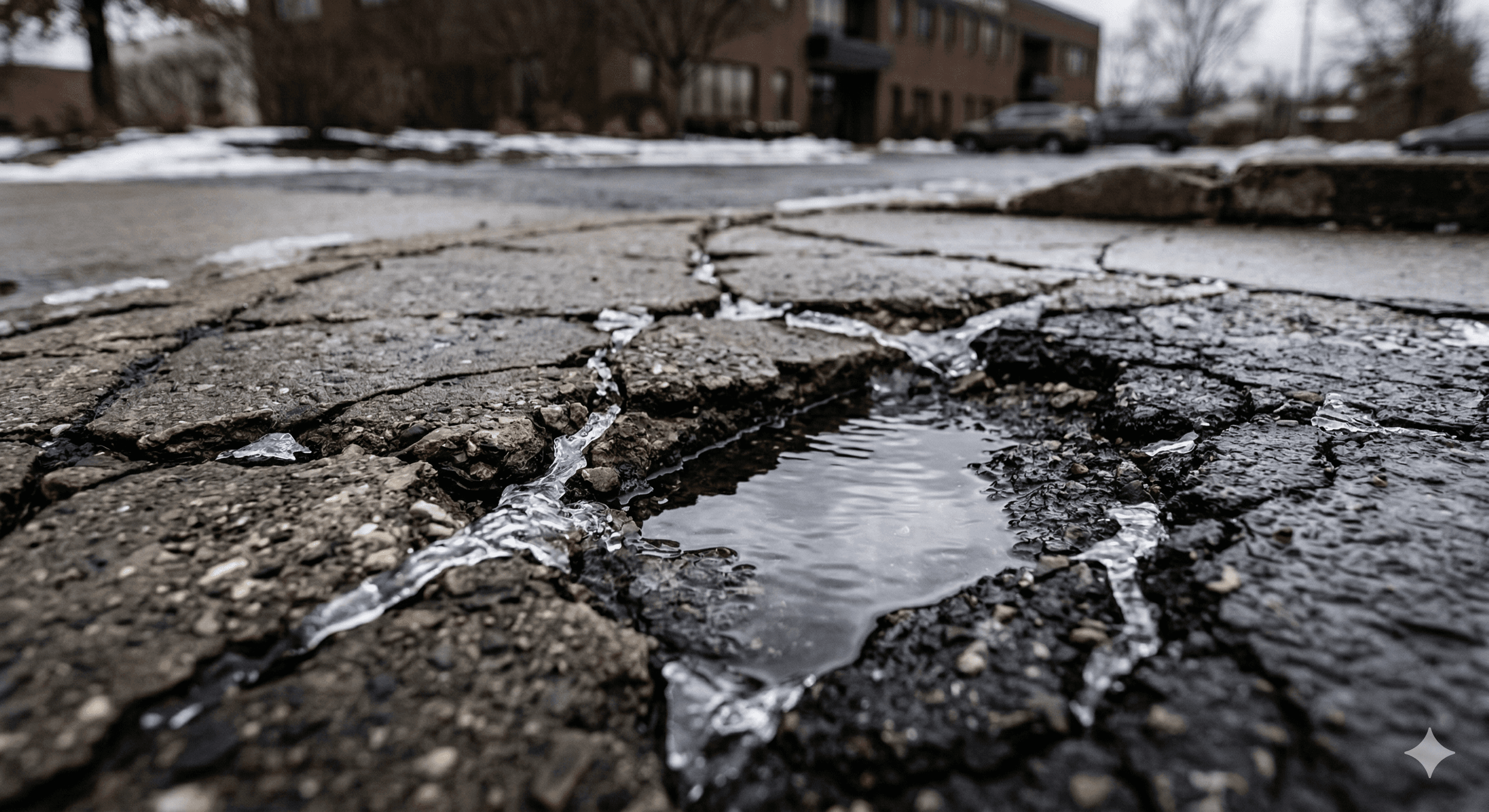
How Winter Freeze Thaw Cycles Damage Commercial Sidewalks, Curbs, and Parking Lots in Lexington KY
Why Winter Surface Damage Gets Worse Fast on Commercial Properties
Winter weather in Lexington is rough on hard surfaces. A parking lot or sidewalk may look mostly fine in early December, then by late winter the same area has widened cracks, rough edges, standing water, and sections that feel uneven underfoot. That damage usually does not happen all at once. It builds through repeated freeze thaw cycles.
When water slips into small cracks or weak joints, it expands as temperatures drop. That pressure can force concrete and asphalt apart a little more each time the cycle repeats. The Federal Highway Administration notes that freeze thaw damage occurs when water in pavement materials freezes and expands, leading to cracking and deeper surface deterioration over time.
For commercial properties, that matters because sidewalks, curbs, and parking lots are not just cosmetic features. They affect safety, drainage, accessibility, and the overall impression your property gives tenants, customers, employees, and visitors. What starts as a small winter issue can become a spring repair bill that is much larger than expected.
How Freeze Thaw Damage Starts
Water Gets Into Small Cracks First
Most winter pavement problems begin with water intrusion. A tiny crack in a curb, a weak joint in a sidewalk, or a worn section of asphalt can allow moisture to move below the surface. Once that water freezes, it expands and puts pressure on the surrounding material.
This is one reason proactive inspections matter so much for commercial sites. The surface may still look usable, but the structure underneath can already be under stress. Over time, repeated freezing and thawing can turn hairline cracks into visible splitting, chipping, and surface breakup. Kentucky transportation research also notes that weather, water, and freeze thaw action are among the most damaging forces acting on pavement systems.
Drainage Problems Make Everything Worse
Freeze thaw damage becomes much more aggressive when a property has drainage issues. Water that should move away from the pavement ends up collecting near curbs, sitting in low spots, or backing up around catch basins. The City of Lexington’s stormwater system includes catch basins, curbs, gutters, and storm sewer infrastructure because moving runoff properly is essential to how paved areas perform.
If those drainage paths are blocked by debris or if the site has grading problems, moisture stays where it should not. That means more freezing, more expansion, and more surface failure through the winter season.
The Most Common Places Commercial Properties See Damage
Sidewalk Panels and Joints
Commercial sidewalks often show winter damage first at the joints. These areas naturally experience movement, and once water starts entering them, the expansion and contraction can cause edges to break down. Small chips turn into spalling, and sections can begin to lift or settle unevenly.
That becomes a safety concern quickly. Uneven sidewalks are not just unattractive. They can create trip hazards, especially around entrances, office buildings, retail centers, multifamily properties, and high foot traffic commercial sites.
Curbs and Edges
Curbs take a lot of abuse in winter. They deal with runoff, plowed snow, repeated moisture exposure, and traffic pressure. Once the face or top edge of a curb begins to crack, freeze thaw cycles can accelerate the breakdown. This often shows up as flaking, chunking, or crumbling corners by the time spring arrives.
On commercial properties, curbs also help control water movement. When they fail, drainage patterns can change, which creates even more problems for surrounding pavement and landscape areas. In many cases, issues that look like simple curb wear are tied to larger grading or runoff problems that need a more complete solution through services like sitework and drainage improvements.
Parking Lots and Drive Lanes
Parking lots may look tough, but they are constantly exposed to traffic, moisture, temperature swings, and chemical treatments during winter weather. If a crack is left open going into cold months, water can move below the surface and weaken the base. Once that happens, drivers often see the result later as widening cracks, potholes, or sunken areas.
This is especially common in areas where water pools after rain or snowmelt. If the lot has poor drainage or aging pavement, freeze thaw cycles can push it from manageable maintenance into much more expensive repair work.
Why Lexington Commercial Properties Are Especially Vulnerable
Lexington properties deal with regular winter temperature swings, not just long periods of deep cold. That matters because repeated movement above and below freezing can be harder on paved surfaces than one sustained freeze. Pavement research used by FHWA shows that many regions experience multiple freeze thaw cycles each year, and those cycles contribute heavily to deterioration when moisture is present.
For commercial owners and property managers in Central Kentucky, this means winter damage is often a slow progression hidden in plain sight. A lot may still function. A sidewalk may still be passable. But the underlying wear is growing each week until spring makes it obvious.
The Hidden Costs of Waiting Until Spring
Many property managers delay pavement repairs until damage becomes impossible to ignore. The problem is that freeze thaw issues tend to multiply. One cracked section allows more water in. More water creates more expansion. More expansion weakens nearby areas.
That delay can lead to:
• Higher repair costs because the damaged area has spread
• Greater liability risk from uneven walking surfaces
• More drainage issues around curbs, lots, and entrances
• A rougher appearance that affects curb appeal and tenant perception
There is also the operational side. Damaged curbs and lots can interfere with snow clearing, increase puddling, and create recurring maintenance headaches long after winter is over.
What Commercial Property Managers Should Look For
Early Warning Signs
If you manage a commercial site in Lexington, winter and early spring are the best times to look closely at hardscape conditions. Watch for surface changes that suggest moisture is getting underneath.
Some of the most common warning signs include:
• Cracks that are longer or wider than they were in fall
• Chipping or flaking concrete edges
• Low spots where water keeps collecting
• Separation at joints or around curbs
• Potholes or rough patches forming in drive lanes and parking stalls
These problems are easier and more affordable to address when caught early. Once a section begins breaking apart, repairs often become more invasive.
The Landscape Connection
Hardscape damage is not always just a pavement problem. Poor grading, clogged drainage routes, and neglected property edges can all contribute to winter failure. Leaves, silt, and debris can block runoff paths and push water back onto the pavement surface. That is one reason commercial exterior maintenance should be looked at as one connected system rather than separate issues.
A strong winter plan often includes both hardscape attention and services like commercial landscape maintenance or snow and ice management so water, debris, and traffic pressures are managed together.
How to Reduce Winter Damage Before It Spreads
The best way to control freeze thaw damage is to stay ahead of water intrusion. That means identifying cracks early, correcting drainage issues, and watching problem areas before they become structural failures.
For many commercial properties, the smartest steps are simple:
Inspect Before and After Storms
High traffic areas, curb lines, loading zones, entrances, and walkways should be checked regularly during winter. Small defects are easier to spot before they are hidden by debris, snow piles, or standing water.
Keep Drainage Paths Clear
Catch basins, curb inlets, and runoff channels should stay clear so melting snow and winter rain can move off the property correctly. Lexington’s stormwater guidance makes clear that catch basins and similar infrastructure are key parts of runoff management.
Address Small Failures Early
Minor cracking and surface breakdown are usually the warning stage, not the final stage. Once water is already entering the pavement system, every cold snap has the potential to worsen the damage.
Why a Proactive Site Review Matters
By late winter, many commercial properties already have visible signs of hardscape stress. The question is whether those issues will be handled while they are still manageable. A site review can reveal the difference between normal wear and problems that point to drainage failures, base instability, or larger repair needs.
For commercial properties in Lexington, that kind of review is often the difference between a targeted fix and a major seasonal repair bill. Freeze thaw damage is rarely just about cold weather. It is usually a sign that water is moving where it should not, and that the site needs a better maintenance strategy.
Protect Your Property Before Small Winter Damage Turns Into Major Repairs
If your sidewalks, curbs, or parking lot are showing signs of winter wear, now is the time to take a closer look. Green Solutions Landcare helps commercial properties in Central Kentucky identify drainage issues, surface failures, and exterior maintenance gaps before they become larger problems. Whether you need help with sitework improvements, seasonal planning, or a full exterior maintenance strategy, our team can help you build a smarter plan for the year ahead.


LOAD MORE