Protecting Commercial Landscapes During Holiday Traffic Surges
Protecting Commercial Landscapes During Holiday Traffic Surges
December is one of the most damaging months for commercial landscapes in Central Kentucky. Retail centers, office parks, medical facilities, industrial sites, and HOA common areas all experience sharp spikes in foot and vehicle traffic during the holidays. At the same time, turf is dormant, soil moisture is high, and freezing temperatures eliminate any chance of recovery until spring.
Without planning, a few high traffic weeks can undo an entire year of landscape investment.
Why Holiday Traffic Causes Disproportionate Damage
Holiday traffic is not just heavier. It is different.
Pedestrian movement becomes less predictable. Visitors take shortcuts. Employees park in overflow areas. Deliveries increase dramatically. Temporary décor reroutes normal walk paths. All of this concentrates pressure into small areas that were never designed to handle that level of use.
Commercial sites are especially vulnerable because turf is already weakened by cold temperatures and reduced root activity. Even properties with ongoing commercial landscape maintenance need December specific strategies to prevent damage.
Areas Most Vulnerable on Commercial Properties
Holiday related damage almost always appears in the same locations.
Entrances and Exit Points
Main doors, secondary employee entrances, and event access points see congestion. When sidewalks feel crowded or icy, people step onto turf edges repeatedly.
Parking Lot Edges and Medians
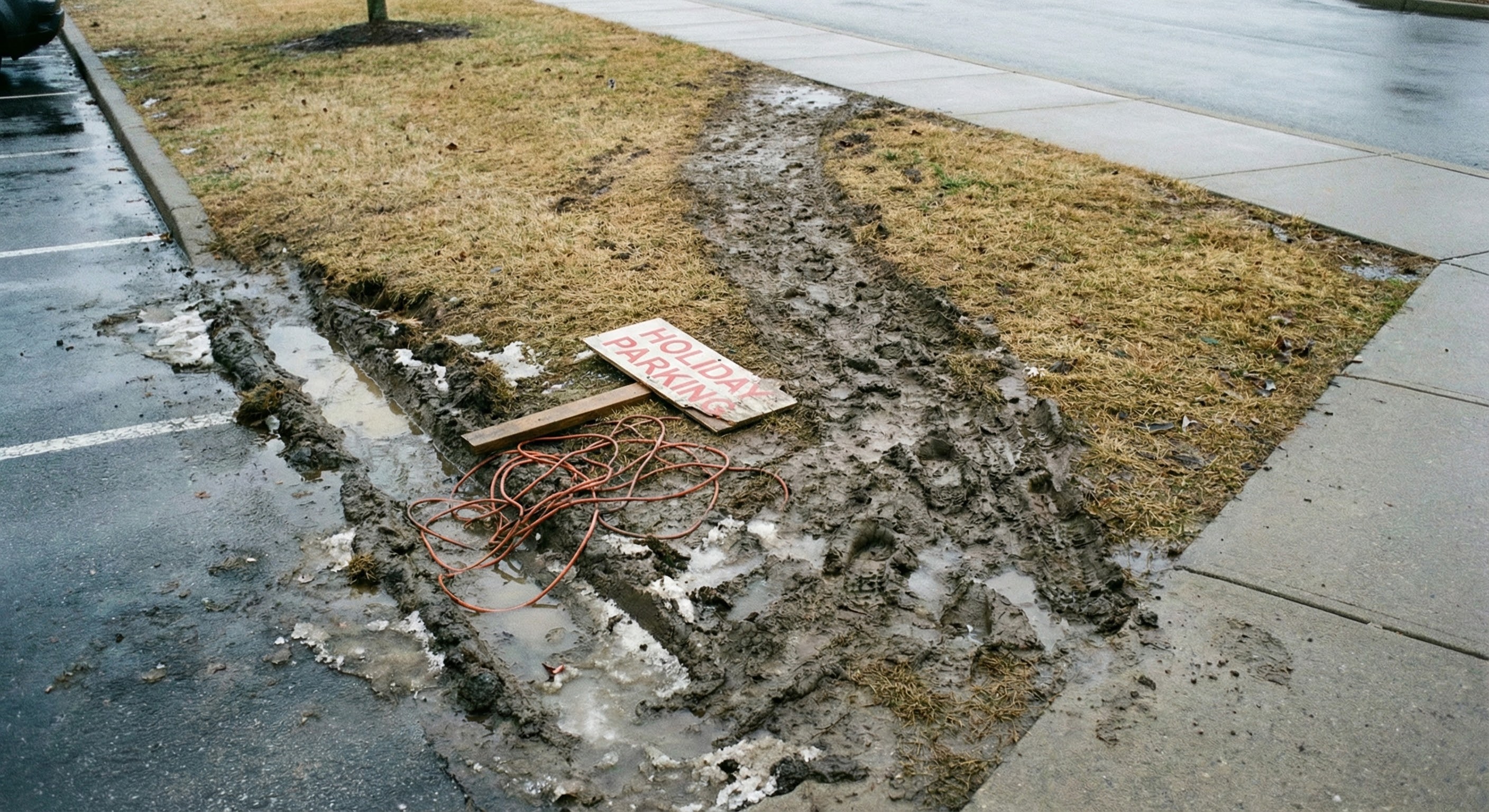
Overflow parking pushes vehicles closer to grass. Passengers step directly onto turf, and even light vehicle encroachment causes severe compaction in winter.
Sidewalk Corners and Shortcuts
Increased traffic leads to shortcut behavior. Corners become desire paths quickly, especially near retail and office buildings.
Dumpster Pads and Delivery Access
Holiday deliveries surge. More trips mean more foot traffic and occasional vehicle movement near dumpster enclosures and service areas.
What Foot Traffic Does to Dormant Turf
Dormant turf is not resilient turf.
Frozen grass blades snap instead of bending. Repeated steps damage tissue that cannot heal until spring. At the same time, soil compaction builds steadily, reducing oxygen exchange and water movement through the root zone.
This combination is why turf damage caused in December often looks far worse than damage from other seasons. The effect is cumulative and delayed.
Vehicle Pressure Multiplies Winter Damage
Even minimal vehicle traffic can cause lasting damage in winter.
Tires compress saturated soil deeply, collapsing structure and tearing turf crowns. Once ruts form, freezing temperatures lock them in place. These areas rarely recover without grading, aeration, or sod replacement.
Temporary barriers, cones, or curbing protection during peak weeks are far less expensive than spring repairs.
Holiday Decorations and Installation Traffic
Seasonal décor introduces a hidden layer of landscape stress.
Lighting runs, signage, stakes, and display elements often cross turf and planting beds. Installation and removal funnel foot traffic into narrow lines. When done on frozen ground, this creates straight line damage patterns that persist into the growing season.
Planning décor routes ahead of time and keeping installation paths on hardscape dramatically reduces this damage.
Snow, Ice, and Traffic Together Create Compounding Issues
Holiday traffic almost always coincides with winter weather.
Snow and ice push pedestrians off sidewalks and onto turf edges. Meltwater refreezes where people step, worsening avoidance behavior. Deicers applied for safety wash into adjacent turf, dehydrating grass and stressing roots.
Understanding how winter traffic, materials, and soil conditions interact is a core topic in professional landscape education, including regional training programs like the Kentucky Turf and Landscape Management Short Course, which focuses on real world turf challenges faced by commercial sites.
December Is When Spring Landscape Problems Are Created
Most spring turf failures begin in December.
Bare spots form from repeated foot traffic. Soil compaction limits spring root growth. Drainage issues worsen as thawing begins. Salt injury appears along sidewalks. Vehicle damage becomes visible once turf thins.
Because turf is dormant, these issues go unnoticed until green up fails.
Practical Ways to Protect Commercial Landscapes During the Holidays
Holiday traffic is predictable, which makes it manageable.
Redirect Pedestrian Flow
Keep sidewalks clear early and consistently. Temporary signage or visual barriers discourage shortcut behavior.
Protect Parking Lot Turf
Block lawn edges and medians during peak weeks to prevent stepping and vehicle encroachment.
Coordinate Delivery Routes
Designate delivery paths that avoid landscaped areas and reinforce hardscape access points.
Limit Turf Exposure to Deicers
Apply only necessary amounts and avoid overspreading near lawn edges. Monitor buildup along sidewalks.
Plan Enhancements Before Damage Repeats
Recurring December damage usually points to layout or traffic flow issues. Solutions often include expanded hardscape, adjusted grading, reinforced edges, or redirected walk paths, addressed through commercial landscape enhancements.
What to Look for During a December Walkthrough
A winter inspection should focus on:
Pedestrian shortcuts forming off sidewalks
Lawn edges next to full parking rows
Compacted soil near entrances
Salt residue along turf borders
Muddy areas during warm spells
Linear damage from décor installation
These patterns predict where spring repairs will be required.
When to Bring in a Commercial Landscape Partner
If holiday traffic damage happens every year, the issue is rarely effort. It is usually site design or circulation.
A commercial focused partner can adjust layouts, improve drainage, add protective buffers, and plan seasonal strategies that align with how people actually use the property.
Commercial properties across Central Kentucky reduce winter losses by planning early. Scheduling a December consultation through Green Solutions Landcare helps prevent short term traffic surges from becoming long term landscape problems. More about the team and approach is available on the About page.
Key Takeaways
Holiday traffic surges concentrate stress on commercial landscapes at the most vulnerable time of year. Frozen turf, soil compaction, vehicle pressure, and altered pedestrian behavior combine to create damage that often appears months later. Managing traffic flow, protecting lawn edges, coordinating deliveries, and inspecting properties in December significantly reduces spring repair costs and preserves landscape performance year round.


LOAD MORE