How Snow, Ice, and Foot Traffic Damage Commercial Lawns in Kentucky
How Snow, Ice, and Foot Traffic Damage Commercial Lawns
Winter is hard on commercial turf in Central Kentucky. Even when grass is dormant, snow cover, ice layers, freeze thaw swings, and constant pedestrian shortcuts can weaken turf crowns, compact soil, and create springtime bare spots that turn into weeds, mud, and erosion. For office parks, retail centers, multifamily communities, industrial sites, and HOA common areas, that damage shows up right when properties need to look their best.
This guide breaks down what is actually happening to your turf in winter and what commercial property managers can do to reduce spring repair costs.
Why Winter Damage Hits Commercial Sites Harder
Commercial lawns take more abuse than residential turf because they deal with:
Higher foot traffic near entrances, mail areas, dumpster pads, and amenity spaces
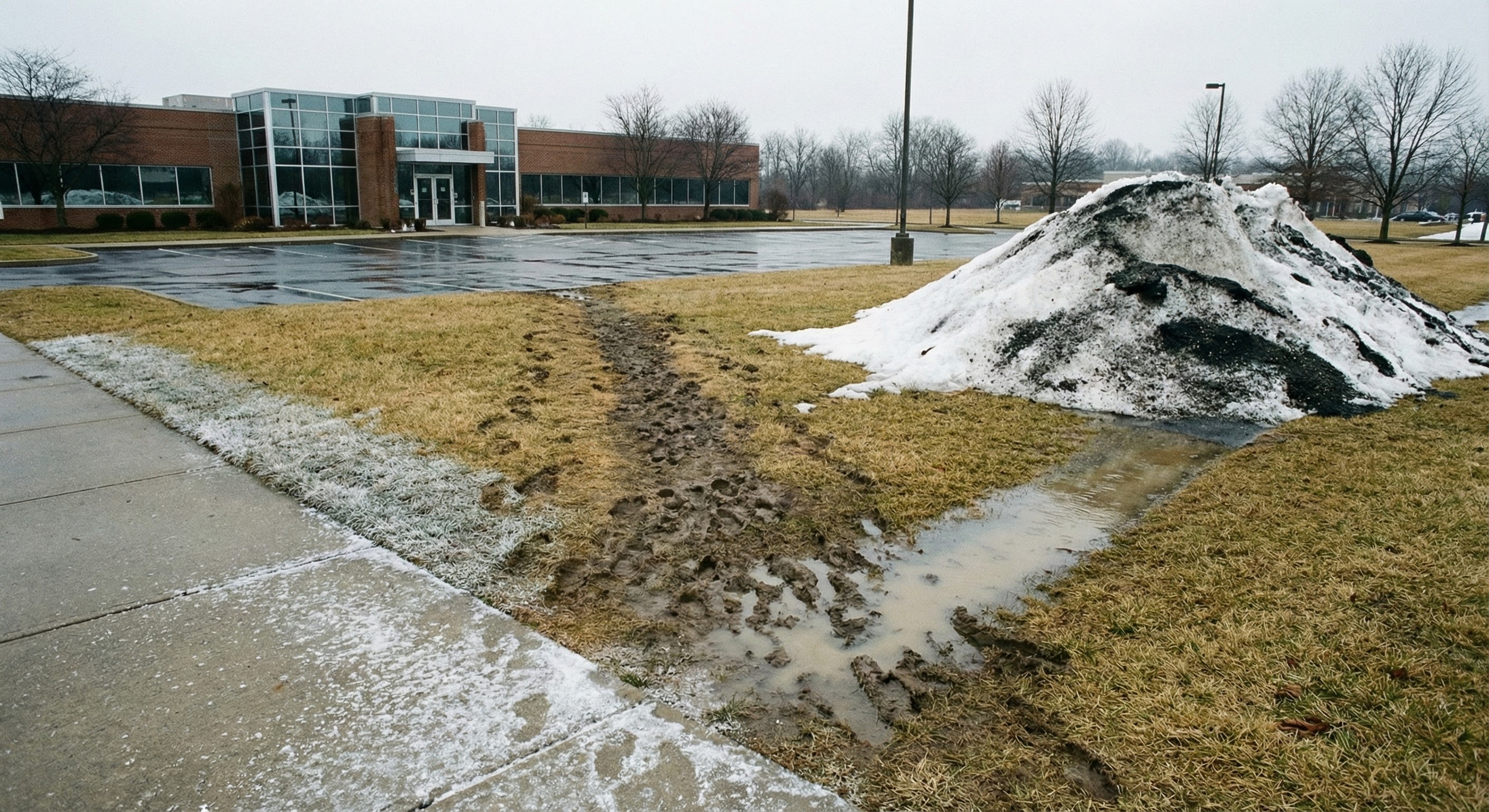
Snow storage piles from plowing that sit on turf for weeks
Salt and brine runoff from sidewalks and parking lots
Heavy equipment movement during snow events and service access
Poor drainage pinch points created by curb lines, islands, and compacted subgrades
If your site already has thin turf or drainage issues, winter amplifies them. Planning now helps avoid reactive fixes later. A structured maintenance plan like commercial landscape maintenance keeps winter risks from turning into spring failures.
What Snow Cover Does to Turf
Snow is not automatically bad. A light, short duration snow can insulate turf from extreme cold. The problem for commercial properties is prolonged snow cover and piled snow.
Smothering and Light Loss
When snow sits for long periods, sunlight is reduced and airflow drops. Turf still needs to exchange gases with the atmosphere, even during dormancy. Prolonged cover can weaken grass and delay spring green up.
Compaction From Plow Piles
Snow pushed into large piles compresses the turf beneath it. Those piles melt slowly, holding moisture on the same patch of turf for weeks. That cycle can weaken crowns and create thin areas that break apart under spring traffic.
Disease Risk Under Snow
Prolonged snow cover can increase the risk of snow mold and other turf diseases that appear when temperatures rise. If your property has shaded areas, north facing slopes, or persistent snow piles, those are common hot spots. University extension resources on seasonal lawn care and winter conditions are useful references for what to watch for in Kentucky, including publications like Considering the Environment in the Maintenance of Your Kentucky Lawn.
How Ice Causes Turf Loss
Ice is more destructive than snow because it forms a dense seal over turf.
Oxygen Deprivation
A solid ice layer blocks gas exchange. When turf cannot breathe, crowns weaken and may die, especially if ice persists through repeated cold periods.
Crown Damage During Thaw
When ice melts and refreezes, water shifts around the crown and soil surface. That expansion and contraction can loosen turf and expose roots.
Hidden Slip Paths and Concentrated Traffic
Ice on sidewalks often pushes pedestrians onto the grass edge as people try to avoid slipping. That funnels traffic into narrow strips of turf, exactly where soil stays wet the longest.
Kentucky road agencies use multiple salt compounds and approaches to manage ice. Understanding how deicing products behave helps property managers anticipate runoff and turf stress. Kentucky Transportation Cabinet guidance like Knowing your salts provides a helpful overview of salt types used regionally and why they are applied.
Freeze Thaw Cycles and Frost Heave
Central Kentucky winters often bounce between freezing nights and warmer days. That freeze thaw pattern creates turf instability.
Frost Heave
Moist soil freezes, expands, and lifts turf slightly. Then it thaws and settles unevenly. Repeated cycles can push crowns upward, exposing roots and reducing anchoring.
Weak Turf Tears in Spring
When turf is lifted and loosened, early spring mowing, foot traffic, and maintenance activity can tear grass instead of cutting it cleanly. Those tears become bare patches.
Drainage Makes or Breaks Winter Resilience
Sites with poor drainage hold more water, which freezes deeper and stays unstable longer. If your property has ponding near curb lines, downspouts dumping onto turf, or soggy low spots, winter is when the damage starts.
Drainage corrections and grading adjustments done at the right time reduce winter stress and spring failures. Enhancement planning through commercial landscape enhancements can address chronic runoff paths, low areas, and traffic choke points.
Foot Traffic Is the Silent Killer
Foot traffic is often the biggest winter problem for commercial lawns because it is continuous and concentrated.
Frozen Grass Blades Snap
When turf is frozen, the blades become brittle. Repeated steps snap tissue and create stress scars that show up later as thinning.
Soil Compaction Builds All Winter
Compaction is not just a summer issue. Even in winter, repeated traffic compresses soil, reduces pore space, and limits oxygen and water movement. That leads to shallow rooting and slower recovery.
Commercial Hot Spots to Inspect
Focus on the areas that predictably take traffic:
Main entrances and side employee entrances
Sidewalk corners where people cut across grass
Mail kiosks, package lockers, and amenity areas
Dumpster enclosures and loading access zones
Bus stops, crosswalk approaches, and desire paths
If you see a worn path in winter, assume it will be a bare spot in spring unless you change the route.
Snow Removal Practices That Damage Lawns
Snow and ice management is necessary for safety, but certain practices repeatedly harm turf.
Plow Blade Scalp and Sod Peeling
When plows scrape too low near curb lines or islands, they shear crowns and peel sod edges. That damage often looks like “winter kill” in spring but is actually mechanical.
Snow Storage in the Wrong Places
Storing snow on turf islands and lawn edges creates prolonged cover, compaction, and saturated soil. Repeated piling in the same place causes predictable turf failure year after year.
Salt and Brine Runoff Burn
Salt runoff draws moisture out of turf and can damage roots. Most commercial properties see this along sidewalk edges and at the downhill side of lots where meltwater flows.
Lexington publishes its snow and ice control approach and prioritization, which is useful context for how local conditions are managed and why brine and salt are common. See the City of Lexington snow and ice control plan for local operational context.
Why Winter Damage Shows Up Late
Property managers often do not realize there is a problem until spring, for a few reasons:
Dormancy Hides Decline
Dormant turf is already brown, so stress, crown injury, and thin areas are not obvious.
Melt Reveals Patterns
As snow piles melt, you see rings, patches, and edges that stayed covered longer. That is where turf is weakest and where disease pressure is highest.
Early Spring Rain Makes It Worse
Compacted soil drains poorly. Spring rain turns thin turf areas into mud, which invites more traffic avoidance, more compaction, and erosion.
That is why winter inspections matter. Catching patterns early keeps the spring plan organized instead of reactive.
Practical Prevention for Commercial Properties
You cannot control the weather, but you can control traffic flow, snow placement, and high risk zones.
1) Manage Pedestrian Flow
Keep sidewalks cleared early to reduce “grass edge walking”
Add temporary cones or signage to block shortcuts
Use mulch paths or stabilized walk routes in chronic desire path areas
2) Choose Snow Storage Zones
Assign storage zones that do not bury turf islands
Avoid piling on shaded lawn edges
Keep piles away from downspouts and drainage inlets
3) Reduce Salt Exposure Where Possible
Use the minimum effective deicer rate
Keep spreaders calibrated
Consider alternative products in turf sensitive areas
State level information on winter treatment resources can help you understand how salt, brine, and application methods behave during storms. KYTC’s snow and ice resource hub is a good reference point for how winter materials are used across Kentucky, including brine and salt inventories. See Snow and Ice Resources for context.
4) Plan Spring Recovery Before Spring Arrives
If your property has recurring winter issues, January is the time to map them and plan fixes. That can include:
Core aeration scheduling for compacted zones
Overseeding plans for traffic areas
Drainage corrections and grading improvements
Hardscape edge repairs where plows tear turf
Bed expansions or protective buffer zones near sidewalk corners
A winter walkthrough with a commercial crew helps prioritize what will create the biggest visual and functional improvement.
What to Check During a Winter Site Walk
Use a quick, repeatable checklist for commercial inspections:
Where are pedestrians stepping off pavement and why
Where are snow piles being stacked and how long do they persist
Where does meltwater flow and refreeze
Are there salt crust lines on turf edges near sidewalks
Are there muddy or saturated spots during warm spells
Are there turf edges torn back near curbs and islands
Document these areas with photos and a simple map. That becomes your spring repair plan.
When to Bring in a Commercial Landscape Partner
If winter issues are recurring, the fix is usually a mix of maintenance consistency and targeted improvements, not just a one time reseed.
A commercial focused partner can help with:
Traffic pattern solutions that reduce turf wear
Drainage and grading changes that prevent ice sheets and ponding
Enhancement work that makes high traffic zones durable
Maintenance timing that supports spring recovery
If you want a winter walkthrough and a spring action plan, schedule a consult through Green Solutions Landcare or learn more about the team and service coverage on the About page.
Key Takeaways
Snow, ice, and foot traffic damage commercial lawns through smothering, oxygen deprivation, mechanical tearing, soil compaction, and freeze thaw instability. The highest risk zones are predictable, and prevention is usually cheaper than spring renovation. Managing pedestrian flow, planning snow storage, limiting salt exposure near turf, and addressing drainage issues will reduce bare spots and improve spring green up across commercial properties.


LOAD MORE