Spring Drainage and Irrigation Problems on Commercial Properties in Lexington, KY
TLDR:
Spring is when drainage and irrigation problems start showing up fast. Heavy rain, saturated soil, runoff, and uneven watering can all lead to muddy areas, turf damage, weak plant health, and a property that looks rough early in the season. For commercial properties in Lexington, catching these issues in spring can help prevent larger repair costs and keep the landscape healthier through the rest of the year.
Spring Drainage and Irrigation Problems on Commercial Properties in Lexington, KY
Why spring exposes landscape water problems
Spring usually makes water issues easier to spot than any other time of year. After repeated rain events, low spots hold water longer, turf starts thinning in saturated areas, and mulch can wash out of beds that looked fine a few months ago. On commercial properties, these problems tend to show up around downspouts, curb lines, parking lot edges, entrances, compacted turf areas, and any part of the landscape where water has nowhere to go.
This matters because water problems are not just cosmetic. Poor drainage can weaken turf, stress shrubs, create muddy foot traffic areas, and make the entire property look neglected even when the rest of the maintenance is being handled well. In some cases, excess moisture can also increase disease pressure and make it harder for plant material to perform the way it should.
When should irrigation systems be turned back on in spring?
Irrigation systems should usually be turned back on once the risk of hard freeze has passed and the property is actively moving into the growing season. In Lexington, that often means spring startup happens once temperatures are more stable and the landscape is ready for regular watering adjustments. The point is not just to turn the system on, but to make sure it is working correctly before dry conditions arrive.
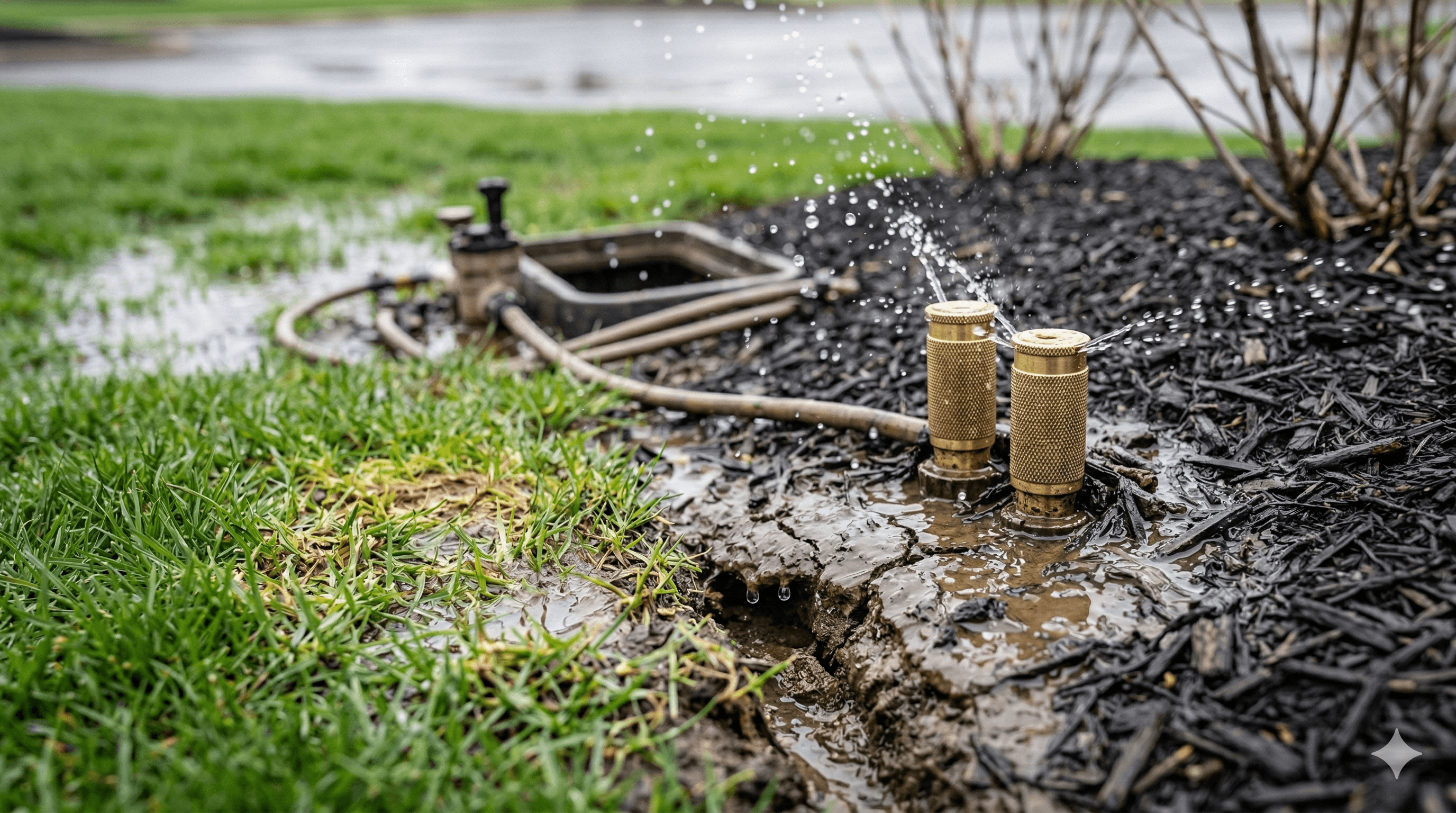
A spring irrigation startup should include checking for broken heads, poor spray patterns, clogged nozzles, leaks, and zones that are watering pavement or missing plant material entirely. Commercial properties often go into spring assuming the irrigation system is fine because it worked the year before, but winter can shift components and create issues that are easy to miss until parts of the property start declining. Efficient irrigation setup and regular system checks are widely recommended because distribution problems waste water and lead to uneven landscape performance.
Why is water pooling on a commercial property after rain?
Pooling water usually happens because the site cannot move water away quickly enough. That can be caused by compacted soil, low spots in the grade, blocked drainage paths, heavy clay content, runoff from hard surfaces, or a combination of several issues at once. Sometimes the problem is obvious, like a visible depression in the turf. Other times it is more subtle and shows up as a section of lawn that always stays wet longer than the rest.
On commercial properties, water pooling tends to become a recurring issue because the property gets used hard. Foot traffic, vehicle traffic, construction, and repeated mowing patterns can all contribute to compaction over time. Once water starts sitting in those areas, the turf often becomes weaker, muddier, and more difficult to maintain consistently.
How do you know if poor drainage is damaging the landscape?
One sign is turf that stays thin, yellow, or patchy in the same areas again and again. Another is mulch that keeps shifting out of beds after rain. Shrubs may also start showing stress if roots are staying too wet for too long. In some parts of the property, you may notice exposed roots, washed-out bed edges, muddy walk paths, or standing water that stays around well after the storm has passed.
The important thing is to look for patterns instead of isolated one-time issues. If the same corner floods every time it rains, or if one entrance bed keeps washing out, that usually points to an underlying drainage issue instead of a random weather event. Soil drainage and root-zone conditions are major factors in landscape performance, and repeated saturation is a strong sign that the site needs correction rather than just cleanup.
What spring improvements help reduce runoff and muddy areas?
Some of the best spring improvements are simple corrections that help water move more naturally across the site. That can include regrading low areas, improving drainage paths, rebuilding bed edges that allow mulch to wash away, and correcting downspout discharge points that dump too much water into one zone. In some cases, the solution may also involve adjusting irrigation coverage so the property is not getting more water than it actually needs.
Healthy turf and properly maintained landscape beds also help. When grass is cut too short or the soil is badly compacted, water tends to run off faster instead of soaking in well. Beds with proper mulch depth and stable edges can also handle spring rain better than beds that are already worn down from winter. Water management guidance from university and extension sources consistently points to drainage, soil condition, and irrigation efficiency as key parts of preventing runoff and oversaturation.
Common spring water management mistakes on commercial properties
One common mistake is assuming muddy areas will dry out on their own once summer gets closer. Sometimes they do improve, but recurring wet spots usually come back because the site conditions never changed. Another mistake is increasing irrigation too early without checking whether the system is applying water evenly or whether the property even needs it yet.
It is also common to focus only on the turf while ignoring the source of the problem. A low area in the lawn may actually be taking runoff from a roof line, parking lot edge, or hardscaped area nearby. Without solving the flow problem, the visible damage tends to keep returning.
A better spring plan for drainage and irrigation issues
A better spring plan starts with walking the property after rain and paying attention to where water sits, where mulch moves, and where turf stays weak. From there, irrigation should be checked zone by zone so broken heads, leaks, and poor coverage can be corrected early. After that, the property can be evaluated for grading issues, compaction, drainage paths, and other conditions that are making water harder to manage.
For commercial properties in Lexington, this kind of early-season attention can prevent a lot of frustration later. Instead of spending the spring and summer reacting to muddy spots, weak turf, and washed-out beds, it makes more sense to identify the problem early and fix it at the source. That leads to a cleaner-looking property, healthier landscape performance, and fewer recurring issues through the season.
If your commercial property is already showing signs of drainage or irrigation problems this spring, Green Solutions Landcare can help you identify the issue and put together a plan that protects the property for the rest of the season.


LOAD MORE